
The quick version
• Are deer antlers safe for dogs? For most dogs, an antler is a great occasional, supervised chew. They’re a hard chew, so they suit some pups better than others. Whether they’re a good fit depends on your dog’s age, chewing style, behaviour and dental health.
• The main thing to know: they’re hard, so how your dog chews matters more than their size or breed. Steady gnawers do brilliantly; a small number of full-force chewers can occasionally chip a tooth. It’s about matching the chew to how your dog chews.
• Full-force crunchers and gulpers are better off with a softer option — as are puppies with developing teeth, older dogs, and dogs with dental disease or previous dental trauma. Ask your vet if you’re unsure.
• Whole and split antlers both work — split gets you to the marrow faster, whole lasts longer. Pick the size and style that matches your dog.
• Always supervise, and swap it out if it cracks, turns sharp or gets small enough to swallow.
Deer antlers are an all-natural, long-lasting chew magic. They come in a smorgasbord of shapes and sizes, they’re single-ingredient, they’re low-odour and low-mess, and they can keep a keen gnawer happily occupied for hours. It’s no wonder they’ve earned a spot in so many treat cupboards.
But antlers are also a hard chew — and that’s exactly why they last. So the honest answer to ‘are deer antlers safe for dogs?’ isn’t a blanket yes or no. It’s ‘it depends on the dog.’ To get past the hype, we asked Michelle Fuller, a Certified Veterinary Nurse with over seven years’ experience across emergency, critical care and general practice, for the straight story.
Let’s chew it over.
So, are deer antlers safe for dogs?
Here’s Michelle’s honest, no-spin take:
“I wouldn’t describe antlers as completely risk-free, but from a veterinary nursing perspective, I can absolutely see the benefits they can provide. They can be a great source of enrichment, encourage natural chewing behaviour, help mentally and physically tire active dogs, and may provide some benefit to dental hygiene.”
The trade-off? “Antlers are extremely hard,” Michelle says, “and that hardness means there’s a potential risk of dental trauma, including fractured teeth, as well as the possibility of pieces breaking off and being swallowed.” But she's clear it's not a reason to write them off:
“That doesn’t mean every dog given an antler will have an issue, and many dogs may chew them without any obvious issue. I think owners need to understand both the benefits and potential risks, and make an informed decision based on their individual dog, including their chewing style, dental health, age and behaviour.”
So that’s the frame for the rest of this guide — benefits and cautions, so you can make the right call for the pup in front of you.
The good stuff: What antlers bring to the bowl
This is the bit that tends to get glossed over. For the right dog, antlers earn their keep:
• Serious enrichment. Chewing is a natural, satisfying behaviour, and a long-lasting chew gives active or busy-minded dogs a job to do. As Michelle puts it, they “help mentally and physically tire active dogs” — very handy on a rainy day or when you need ten minutes’ peace.
• A structured way to settle. Offered during supervised sessions, an antler can become part of a calm-down routine rather than free-for-all chewing.
• A single-ingredient chew. WAG’s antlers are exactly that — no fillers, additives or mystery. They’re naturally shed by deer in New Zealand and packed here in Australia, with appetising marrow at the centre.
• A novel protein for sensitive pups. Venison isn’t found in most everyday treats, so a deer antler is often considered a lower-allergy — or “hypoallergenic” — option. It’s not an automatic swap for allergy-prone dogs, though: if your dog is on a strict elimination diet or needs to avoid certain proteins, it’s worth checking with your vet before offering one.
• Low fuss. They’re low-odour, low-mess and virtually stain-free — no need to banish them to a separate room — and they last, keeping your shoes (and your velvet couch) intact.
Are antlers good for dog's teeth?
They can lend a hand. As your dog works away at an antler, the natural chewing and scraping action helps wipe away soft, daily plaque that builds up and gives the gums a workout. The longer the chew, the more of that gentle scrubbing happens. Michelle backs the principle: antlers “may provide some benefit to dental hygiene.”
That said, think of it as one part of a daily routine, not a substitute. Good dental care really has three pieces — daily brushing, regular vet checks, and a good chew in between — and the antler is the part your dog actually volunteers for, no toothbrush wrestling required. What it won’t do is shift hardened tartar once it’s set (that’s one for your vet), so it works best alongside a good oral-care routine, not instead of one.
Michelle’s advice if you only do one thing for your dog’s teeth? “Brush their teeth regularly, ideally daily… brushing is one of the best things you can do at home to remove plaque.” Pair a regular gnaw with daily brushing and vet dental checks — dental disease can develop below the gum line where you can’t see it — and your dog’s teeth are covered on every front.
Are deer antlers digestible?
Short answer: the marrow is, and the antler itself wears down slowly into small shavings that most dogs pass without trouble. A WAG antler is a single natural ingredient — no chemical processing and nothing artificial to break down. That’s a real point of difference from something like rawhide, which is heavily processed and can swell in the stomach.
What you don’t want is your dog snapping off and swallowing a large chunk. Antler is dense and slow to break down, so a big piece can cause a tummy upset or, in rare cases, a blockage. Michelle has “seen gastrointestinal upset associated with chew ingestion,” and while she personally hasn’t seen an antler-related obstruction in emergency practice, she’s clear that swallowing a large piece can pose a risk. It’s exactly why we bang on about supervising the session and swapping the antler out once it’s small enough to swallow — do that, and digestibility looks after itself.
How your dog chews matters more than their size
Here’s the reframe that actually keeps teeth safe: it’s not about whether your dog can tackle an antler, it’s about how they go about it.
“I’d base the choice more on the individual dog’s chewing style and behaviour rather than their breed or size,” says Michelle. A patient, steady gnawer is the ideal antler candidate. A dog who tries to crack or crush a chew with full force — or who breaks bits off and swallows them — is the one to be more careful with, no matter how big and tough they look.
One thing to keep front of mind, though: chewing style is the main lens for a healthy adult dog, but it isn’t the whole picture. Puppies with developing teeth, older dogs, and dogs with existing dental disease or a previous fractured tooth can be better suited to a softer option regardless of how gently they chew — so age and dental history are important as well.

Whole or Split - which antler is right for your dog?
At WAG you’ll find two options, and the right one comes down to your dog’s chewing style:
| Split Antler | Whole Antler | |
| What they are | Cut lengthways, exposing the marrow. | Left intact, outer surface on. |
| Best For | Getting straight to the good stuff; a bit gentler. | Patient gnawers who want a longer challenge. |
| Trade-Off | Softer, so can break apart more easily. | Harder and more durable - but that hardness raises dental risks. |
As Michelle explains: “Split antlers are softer and make the marrow more accessible, but they can also break apart more easily. Whole antlers are harder and more durable, but that increased hardness can also increase the risk of dental trauma.” So neither is automatically ‘safer’ — it’s about the match.
Whichever you choose, size it right: big enough that your dog can’t swallow it whole, but easy to hold between the paws. Explore the full WAG Deer Antler range to find the shape and size that suits your dog.
Giving an antler safely: size, supervision and when to swap it out
Doing this well is genuinely simple:
1. Pick the right size and style for your dog’s mouth and chewing behaviour.
2. Make it a supervised session, not an all-day thing. “This can make chewing part of a more structured routine,” says Michelle — “providing mental stimulation while also encouraging dogs to settle.”
3. Keep an eye on the antler. Michelle’s cue to remove it: “if it becomes sharp, starts breaking apart or becomes small enough to swallow.”
4. Watch the swallowing. Even a well-sized antler can turn risky if your dog starts breaking off and gulping pieces — larger chunks can pose a choking or blockage risk, so if a big piece disappears or something seems off afterwards, call your vet.
It’s also worth knowing the signs of dental trouble, because dogs are stoic about mouth pain. Michelle flags: “Bad breath, changes in how they chew, difficulty eating, increased drooling, bleeding from the mouth, facial swelling, or a discoloured or broken tooth.” And a good reminder — “just because they’re still eating normally doesn’t necessarily mean there isn’t a problem.”
What makes a good quality antler?
Not all natural chews are created equal, and this is where it pays to be picky. We asked Michelle what separates a well-sourced chew from a lower-quality one, and her checklist is basically a WAG mission statement:
“I’d want to see clear information about where the product is sourced, what ingredients are used and how it’s processed or made. There should also be clear guidance around appropriate sizing, supervision and how the product should be used… Having veterinary input into the product would also give me confidence.”
Here’s our end of the deal. WAG Deer Antlers are naturally shed by wild deer in the temperate wilderness of New Zealand at the end of mating season — gathered as a by-product of the venison trade, because we never let a good thing go to waste. They’re collected and heated to around 72°C to sterilise them, and our suppliers test every batch for quality and safety in state-of-the-art, FDA, HACCP and export-accredited facilities before it ships to us. And because antler contains no meat, it isn’t irradiated on entry into Australia — so it reaches you exactly as nature made it.
Once it lands at our Melbourne facility, we cut each antler down into different sizes right here, then wrap every natural piece with a tag. It’s as pure and simple as that.
That ticks every box on Michelle’s list — clear sourcing, one honest ingredient, a tested and traceable process, and vet input right here in this guide. Because as Michelle says, and we couldn’t agree more: “Natural’ doesn’t automatically mean something is appropriate, healthy or safe for every dog.” Knowing the difference is half the job of a good pet parent — and we’re here to help you do it.
Antler alternatives: the right chew for every dog
An antler isn’t the only chew in the WAG range — and for some dogs, it isn’t the best match. Puppies with developing teeth, seniors, dogs with existing dental issues, dogs recovering from surgery, and full-on “crunch-and-swallow” gulpers are all better off with something softer. The good news? There’s a WAG chew for every set of teeth.
As Michelle puts it: “If the goal is enrichment and stimulation, options such as a bully stick may be suitable, provided it’s appropriate for that individual dog and they’re supervised.” A few gentler picks from our range:
• Bully Sticks — softer on teeth than an antler, single-ingredient and whole-family-friendly, from the biggest chewers to the littlest pups.
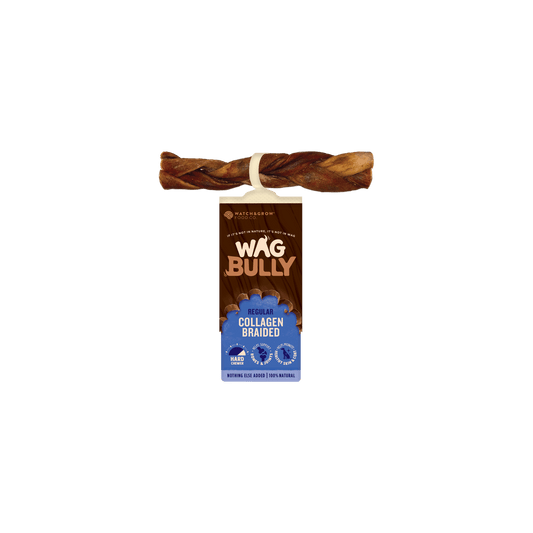
• Our full range of bully chews — braids, sticks, chips and more, so you can match the shape, size and chew time to your dog.
• Collagen Plus — a long-lasting collagen chew that softens as your dog works at it and won’t splinter. Highly digestible and rich in activated beef collagen, it’s a gentler pick for dogs who love a long chew but need something kinder than a hard antler.
And if clean teeth are the specific goal, brushing, a vet-recommended dental chew or a dental diet is the way to go — your vet will point you the right way for your dog.

The bottom line
So, are deer antlers safe for dogs? For most healthy adult dogs, they’re a brilliant, natural, long-lasting chew — but the honest answer depends on the dog in front of you. Rather than a flat yes or no, it comes down to weighing the benefits against the risks for your dog’s age, chewing style, behaviour and dental health. The better question isn’t really ‘are they safe?’ but ‘do they make sense for the set of teeth doing the chewing?’
As Michelle sums it up: "There isn't one perfect chew for every dog." Weigh up the benefits and the cautions, pick the option that fits your pup, and you're good to go — the perfect chew for your dog is out there, and their tail's already wagging at the thought.
Every dog is different. If you’re unsure whether deer antlers are suitable for your pup, it’s always worth chatting with your vet for advice.
FAQ
Do vets recommend antlers for dogs?
There’s no blanket yes from the veterinary world — it depends on the individual dog. Many dogs chew antlers happily with no issues, while puppies, seniors and dogs with dental problems may be better off with something softer. Your vet knows your dog’s mouth best, so they’re the one to ask if you’re unsure.
Are antlers too hard for dogs’ teeth?
Antlers are a hard chew, and that hardness is the main reason a small number of dogs can chip or fracture a tooth. It’s usually the full-force ‘crunchers’ at risk rather than steady gnawers. Match the antler to your dog’s chewing style, supervise, and you’ve stacked the odds in your favour. Age and dental health count too — puppies, older dogs and dogs with existing dental disease or a past fracture may be better off with a softer chew, whatever their style.
Are split antlers safe for dogs?
Split antlers are a little softer and get your dog to the marrow faster, which some pups love. The flip side is they can break apart more easily, so supervision and swapping them out when they get small still apply — same as any hard chew.
How long do deer antlers last?
There's no set lifespan — it depends on the antler's size, how often it's given to your pup and the enthusiasm of the dog in question. That said, most of our customers report their WAG Deer Antler lasts two or more weeks. Treat ‘long-lasting’ as relative rather than a promise of a set number of days.
Can puppies have deer antlers?
Best to check with your vet first. These little teeth are still developing, so something softer is often the better call for now. There'll be plenty of time for serious gnawing later.
Try This



Michelle Fulle
Certified Veterinary Nurse
Up Next
Chomp happens: The best chews for teething puppies


