
Ever had one of those moments where your dog’s tummy just seems a bit… off?
Maybe their poos aren’t quite right. Maybe there’s a bit more gas than usual. Or maybe your doggo just isn’t acting like their usual happy, tail-wagging self.
It’s pretty common, and often it comes back to what’s going on in their gut.
That’s where probiotics can play a role.
You’ve probably heard the term before, but when you start asking what foods are good probiotics for dogs, things can get confusing pretty quickly. There’s plenty of advice out there, but not all of it is clear, practical, or made with dogs in mind.
So, we’re keeping it simple. Real food, no overthinking. Here’s what’s worth knowing, and how to support your dog’s gut health in a way that fits into everyday life.
What are probiotics, and why do they matter?
Your dog’s gut does a lot more than just digest food. It’s working behind the scenes every day to keep things running smoothly.
It’s home to a whole mix of bacteria. Some of these are helpful, and some are less helpful. Keeping the balance right is what matters.
Probiotics are the good ones. They help support balance in the digestive system and play a role in your dog’s overall well-being.
When your dog’s gut is in good shape, it can help to support:
-
Healthy digestion
-
Regular poos
-
Nutrient absorption
-
Day-to-day wellbeing
Over time, supporting your dog’s gut health can also play a role in their overall comfort, energy, and wellbeing.
That balance can shift over time. A sudden food change, stress, antibiotics, or a questionable snack scoffed off the floor can all throw things out a bit.
When that happens, you might notice a few signs that your dog’s gut could use some extra support.

Signs your dog’s gut might need a little extra love
Dogs can’t exactly tell us when something feels off, but they do give us clues.
A few common signs include:
-
Soft or inconsistent stools
-
Extra gas
-
A bloated or sensitive tummy
-
Bad breath that hangs around
-
Itchy skin
-
A coat that’s lost its shine
-
Changes in appetite
-
Lower energy than usual
These signs do not automatically mean probiotics are the answer, but gut health can definitely be part of the picture.
If something feels ongoing or unusual, it’s always worth having a chat with your vet. General nutrition advice is helpful, but your vet knows your dog’s individual needs best.
So, what foods are good probiotics for dogs?
The good news is, there are a few natural options you can add to your dog’s diet. The key is knowing which ones are actually suitable and how to serve them safely.
Plain yoghurt
Yoghurt is usually the first food people think of, and for good reason. It can contain live cultures that support gut health.
But not all yoghurts are a good idea for dogs. A lot of what’s made for humans just isn’t designed with dogs in mind.
If you want to try yoghurt, it should be:
-
Plain
-
Unsweetened
-
Free from artificial additives
-
Free from sweeteners like xylitol
That last one is especially important because xylitol is dangerous for dogs.
It’s also worth knowing that some dogs simply do not tolerate dairy very well. For those pups, yoghurt can cause more tummy upset rather than help.
So yes, yoghurt can be an option, but it is not automatically the best fit for every dog.
Kefir
Kefir is another fermented dairy food that can contain beneficial bacteria. It’s similar to yoghurt, but it often contains a wider variety of live cultures.
Some find kefir easier to digest than yoghurt, although that depends on the dog.
As with yoghurt, keep it plain and introduce it slowly. Start with a small amount and keep an eye on how your dog responds.
Fermented foods
Some fermented foods, like plain sauerkraut, can contain beneficial bacteria too.
The main issue here is that many store-bought options are packed with added salt, spices, onions, garlic, or preservatives. That makes them less straightforward for dogs.
If you’re considering fermented foods, plain and dog-safe is the only way to go, and only in very small amounts.
Dog-friendly yoghurt treats
This is where things can get a bit easier.
Human probiotic foods can be hit or miss. You have to read labels carefully, watch for ingredients that aren’t dog-friendly, and work out what your dog actually tolerates.
Dog-friendly options made with yoghurt take away some of that uncertainty.
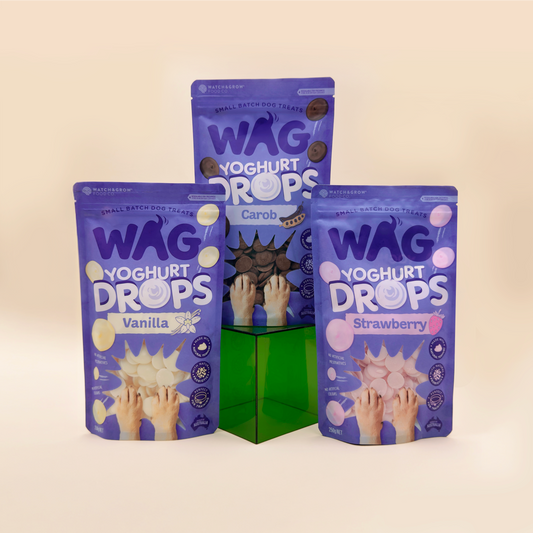
Our yoghurt drops are a simple example. They’re made specifically for dogs, so you don’t have to worry about anything that doesn’t belong in your dog’s bowl.
It’s a straightforward way to offer a yoghurt-based treat, without the extra label-checking or second-guessing.

What about pumpkin and banana?
You’ll often see pumpkin or banana mentioned in articles about dog gut health.
They can absolutely be useful foods, but they are not probiotics.
They’re considered prebiotics, which means they help feed the good bacteria already living in your dog’s gut.
That’s still a good thing. Prebiotics and probiotics can work nicely together, but they’re not the same.
So if you’re looking into what foods are good probiotics for dogs, it helps to understand the difference:
-
Probiotics are beneficial bacteria
-
Prebiotics help feed those beneficial bacteria
Both can have a place in a balanced diet.
Not all probiotic foods are as helpful as they sound
This is where things can get a bit murky.
A food can be labelled as ‘probiotic’, but that doesn’t automatically mean it’s a good choice for your dog.
A few things to watch out for:
-
Flavoured yoghurts with unnecessary extras
-
Artificial sweeteners, especially xylitol
-
Ingredients that aren’t suitable for dogs
-
Giving too much at once, which can upset your dog’s stomach
-
Assuming foods made for humans are automatically suitable for dogs
And when it comes to treats, it’s all about balance. Some options are designed to be enjoyed in moderation as part of a varied diet, rather than as a primary source of probiotics.
When it comes to gut support, you don’t need to introduce multiple new foods at once. A steady, simple approach is much easier to manage.

Making gut support easier to stick to
There are some great natural probiotic foods out there, but let’s be honest, they can take a bit of effort.
You need to check labels, portion carefully, and keep an eye on how your dog responds. That works for some people, but when life gets busy, simple options are much easier to stick with.
At WAG, we’re big believers that what goes into your dog’s bowl should be just as simple and transparent as what goes into yours.
That’s why dog-specific treats can be handy. They make it easier to build a routine you can actually stick to.
Our yoghurt drops are a nice fit here because they’re easy to portion, easy to serve, and easy for dogs to enjoy. They offer a practical way to include a yoghurt-based treat in your dog’s routine, while giving you confidence in exactly what your dog is getting.
And because they’re only available from April to September, they’ve got that limited-time appeal too.
How to introduce probiotic foods safely
If you decide to try probiotic foods, start slowly.
A few simple tips:
-
Introduce one new food at a time
-
Begin with a small amount
-
Watch for any digestive changes
-
Choose plain, dog-safe options
-
Keep fresh water available
-
Check with your vet if your dog has a sensitive stomach or existing health issues
The goal is to support your dog’s gut, not overwhelm it.
Frequently asked questions
What foods are good probiotics for dogs if they have sensitive stomachs?
It depends on the dog, but plain yoghurt or kefir in very small amounts can suit some dogs. Others may do better with dog-friendly yoghurt treats or other vet-recommended options. Introduce anything new slowly and check with your vet first.
Can dogs have yoghurt every day?
Some dogs can tolerate a small amount of plain, unsweetened yoghurt regularly. Others do not handle dairy well at all. It comes down to the individual dog.
Is kefir better than yoghurt for dogs?
Kefir often contains a wider variety of beneficial bacteria, so some people prefer it. That said, it depends on what works best for your dog.
Is pumpkin a probiotic for dogs?
No, pumpkin is not a probiotic. It’s a prebiotic food, which means it helps feed the good bacteria already in your dog’s gut.
Are human probiotic foods safe for dogs?
Some are fine in small amounts, but many contain ingredients that are not suitable for dogs. Always read labels carefully.

A simple way to support a happier gut
By now, you’ve got a clearer idea of which probiotic foods can support your dog’s gut health.
The main thing is keeping it simple, safe, and consistent.
A healthy gut can support so much of your dog’s day-to-day wellbeing, from better digestion to more of those happy, tail-wagging moments.
Because when you know what’s going into your dog’s bowl, you can feel confident you’re doing right by them.
Disclaimer:
This article is intended as general information only and should not replace professional veterinary advice. If you have concerns about your dog’s health, digestion, or diet, please consult your veterinarian for advice tailored to your pet.
Try This



Ella Cameron
Head researcher
Up Next
Is grain free better for dogs?


